
Reality Bay: Merge & Discover
Moon ActivePuzzle
4.7301.00 Reviews
- Version
- 2.12.1702
- Installs
- 500.00K
- Age Rating
- Everyone
Screenshots




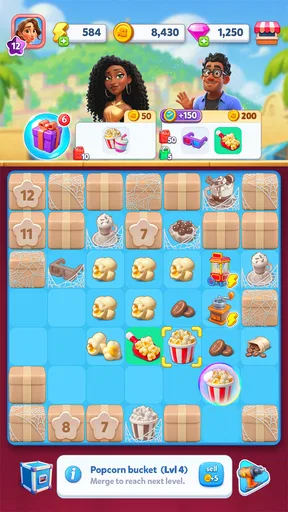


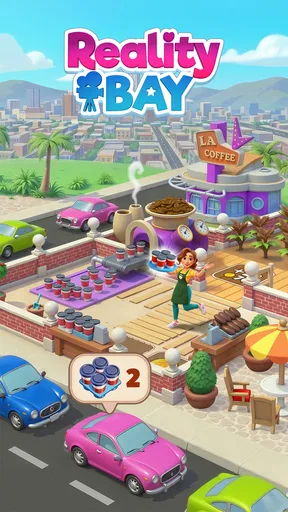
Our Review of Reality Bay: Merge & Discover
 Analysis by Appyee
I went into Reality Bay: Merge & Discover expecting a familiar merge puzzle, but its movie-set theme gives the basic matching loop a more playful reason to keep going. Instead of treating every board as an abstract pile of objects, the game ties merging to building and designing a fictional production world. That small change matters: I am not only clearing space or combining identical pieces; I am gradually helping a set become more complete and watching the surrounding story of Reality Bay take shape.
Developed by Moon Active, this is a free puzzle game for Everyone. It has a 4.7 average from around four thousand ratings and has passed 500K installs, so it has already found an audience among players who enjoy relaxed, progress-based mobile games. I think its strongest appeal is not intense challenge. It is the feeling of making one useful move, seeing a small result, and deciding whether I have time for one more.
Why the first few minutes work so well
The central idea is easy to understand: merge matching items, use the results to develop movie sets, and make decisions that move the production world forward. There is no complicated rulebook to study before playing. The visual language does most of the teaching, which makes the opening especially welcoming if you are new to merge games or simply want something that can be understood while waiting for a bus or taking a short break.
What I like about the opening rhythm is that each action has a visible purpose. A merge changes the board immediately, and the reward is connected to the larger set-building goal rather than being an isolated animation. That gives the first sessions a pleasant sense of direction. I always know what kind of progress I am trying to create, even when the board itself becomes more crowded.
The movie theme also helps separate this experience from a standard garden, restaurant, or home renovation puzzler. The setting does not turn the game into a film simulator, and it should not be approached as a strategy game about actual production. Its value is more modest and more effective: the theme gives the objects and upgrades a recognizable context, so the merge loop feels like part of a small creative project.
The best reason to try it is its immediate readability. I can open it without preparing for a demanding challenge, make progress quickly, and leave with the sense that the short visit was worthwhile. That makes it a good fit for players who want a gentle puzzle rather than a game that demands full concentration from the first tap.
A session rhythm built around small decisions
In my experience, the most satisfying sessions are not the longest ones. The game works best when I treat the board as a series of small decisions: which matching pieces should be combined now, which items should remain available, and how much room I need before creating another upgraded object. That last point is easy to overlook. Merging everything immediately can feel productive, but a crowded board can make the next few moves less comfortable.
I found it useful to pause before making a merge that creates a more advanced item. The immediate reward is tempting, yet the better move is sometimes to preserve a pair or leave an open space for the next sequence. This is one of the first places where the game offers more thought than its relaxed presentation suggests. It is not difficult in the traditional puzzle-game sense, but careless board management can reduce the flow of a session.
That makes the game suitable for two different moods. When I want a quick distraction, I can focus on obvious combinations and enjoy the steady visual feedback. When I have a little more time, I can think about positioning and avoid filling useful spaces too early. The same board supports both approaches, although the second one gives the merge system more depth.
For an everyday example, I can imagine opening it during a short coffee break, completing a few obvious merges, and stopping before the board becomes demanding. Later, I can return with a clearer idea of what I want to combine next. It does not require me to remember a complicated chain of controls, which is important for a game designed around interrupted mobile play.
How well it handles interruptions
Short-session games often fail when they make the player feel punished for leaving. Reality Bay is more comfortable when used in fragments. I can make a little progress, put the phone away, and come back without needing to rebuild my understanding of the entire game. The object-based board provides a visual reminder of where I was, while the set-building goal gives me a reason to continue.
This pause-and-return quality is more important than it may sound. Many puzzle games are enjoyable only when I can commit to a continuous run, but this one fits more naturally around ordinary interruptions. A message, a train arriving, or a work task does not completely destroy the experience. I can stop at a natural point and return when I have another spare moment.
There is still a limit to that convenience. If I leave the board in a crowded or poorly organized state, returning can feel less inviting. My practical advice is to finish a session after creating a little space rather than stopping in the middle of a messy sequence. That habit makes the next visit feel like a continuation instead of a cleanup job.
I also recommend resisting the urge to tap through every available action simply because it is available. The game’s relaxed tone can encourage automatic play, but a brief look at the board before leaving often saves frustration later. Keeping a few useful positions open is more valuable than squeezing out one extra merge before closing the app.
Progress through sets rather than pressure
The movie-set construction gives the game its main long-term shape. Each merge is easier to appreciate when it contributes to a broader visual project. I enjoy that sense of accumulation because it turns small actions into something I can see developing over time. The game is not asking me to solve one huge puzzle in a single sitting; it is asking me to keep improving a world in manageable steps.
That structure also makes it approachable for players who like decorating or collection games but do not want a demanding competitive environment. The appeal is in unlocking the next piece of the setting and making the overall space feel more complete. If you prefer puzzles with a clean finish and a single definitive solution, this may feel too open-ended. If you like gradual development, the design is much easier to appreciate.
The trade-off is that the sense of progress can become more important than the puzzle itself. After the novelty of the film theme settles, the main motivation comes from seeing the next improvement and continuing the chain of merges. Players who need constantly changing mechanics may find the loop predictable. Players who enjoy a dependable routine may see that predictability as a strength.
I would describe the challenge as light planning rather than deep problem solving. There are moments when board space and timing matter, but this is not the right choice if you want the pressure of a timed match-three game or the complexity of a traditional logic puzzle. Its pleasure comes from control, accumulation, and visual completion.
Where repetition becomes noticeable
Every merge game depends on repetition, and Reality Bay is no exception. The same basic satisfaction returns whenever matching objects combine into something more useful, but the loop can lose some freshness if I play for too long in one sitting. The movie-set setting softens that effect, yet it cannot completely remove it.
I noticed that the game is most enjoyable when I stop while the next goal still feels inviting. Playing beyond that point can turn a relaxing activity into routine maintenance. This is not a serious flaw for a casual title, but it is an important expectation to set. The game rewards regular short visits more convincingly than extended sessions.
Its replay value therefore depends on what I want from replaying. If I enjoy returning to improve a developing set, organize a board, and make gradual progress, there is a comfortable reason to keep opening it. If I expect every return to introduce a new rule or radically different puzzle, the repetition will become apparent quickly.
The strongest replay habit is to give each session a small purpose. I might focus on creating room, completing a particular chain, or advancing the current set instead of merging randomly. That approach makes the familiar actions feel more deliberate. It also prevents the game from becoming a background tapping exercise with no clear destination.
Free access and the question of spending
The game is free to download and play, which makes it easy to sample without committing money at the beginning. In-app purchases range from $0.49 to $114.99 per item, so the possible spending scale is wide. I would approach that carefully, especially if I am the kind of player who tends to pay for convenience when progress slows or when I want to continue immediately.
For me, the right way to evaluate the free experience is to treat purchases as optional rather than part of the basic reason to install. The merge loop and set-building theme need to be enjoyable on their own. If I only feel satisfied when progress is accelerated, the game becomes much less appealing as a casual pastime.
Parents should also remember that an Everyone rating describes the intended age suitability, not a promise that every player will handle optional spending in the same way. The game is accessible for a broad audience, but payment decisions still deserve attention on a shared device. That is especially relevant when younger players are attracted by the colorful set-building presentation.
My practical recommendation is simple: play long enough to understand the normal rhythm before considering any purchase. That reveals whether the gradual pace suits you. For some people, the free structure will be enough; for others, the prospect of spending to reduce waiting or increase convenience may be a reason to choose a different puzzle game.
Who will enjoy Reality Bay most
I think this is a strong match for players who want a calm puzzle they can understand immediately, leave without ceremony, and revisit throughout the day. It is especially appealing if you like merging, light collection, and visual development more than competition. The film-set theme adds personality without making the controls complicated.
It also suits people who enjoy organizing a board. Leaving space, choosing when to combine, and keeping a useful chain available are small skills, but they give the game more substance than simply tapping the first matching pair. I found that players who enjoy tidy layouts may get more satisfaction from it than players who treat every move as disposable.
I would skip it if your priority is fast action, serious strategic difficulty, or a large variety of puzzle formats. It is not designed to replace a challenging logic title, and its relaxed structure may feel slow if you want constant intensity. I would also be cautious if repetitive progress loops quickly lose their appeal or if optional purchases tend to make free-to-play games frustrating for you.
Compared with a typical match-three game, this one feels less focused on clearing a fixed arrangement and more focused on building a continuing space. Compared with a traditional merge title, its movie-production setting gives the progression a clearer identity. The compromise is that neither the moment-to-moment puzzle pressure nor the narrative depth is likely to be the main attraction; the balance favors easy progress and casual return visits.
Device details and the practical choice
The listed current version is 2.12.1702, and the game supports Android 7.0 or later. That makes it accessible to people using older Android devices, provided their phones meet that system requirement. I would still judge the experience by how comfortable the board feels on your particular screen, since merge games depend on being able to distinguish small items and open spaces without hesitation.
Because the game is free and rated for Everyone, the barrier to trying it is low. The more important question is not whether it is easy to start, but whether its steady rhythm matches your habits. If you want a game for a few calm minutes between tasks, its design makes sense. If you want a title that rewards long, uninterrupted concentration, its strengths point in the opposite direction.
One useful way to test it is to play three different kinds of session: a very short visit, a return after an interruption, and a longer stretch where you deliberately plan your board. Those situations reveal more than the opening tutorial. You will quickly learn whether the set-building goal keeps you interested and whether the repeating merge actions remain pleasant once the initial theme feels familiar.
My casual verdict after settling into the loop
Reality Bay: Merge & Discover is at its best when I let it remain a small, dependable part of the day. Its immediate hook is clear, its board is readable, and its movie-set progression gives ordinary merges a little extra meaning. I appreciate that I can make progress without preparing for a demanding session, then close the game before it takes over my attention.
Its limitations are equally clear. The core actions repeat, the challenge stays relatively gentle, and the free-to-play structure may not suit anyone who dislikes optional spending around gradual progress. The game does not hide those qualities; they are central to what it is. That makes the decision straightforward rather than complicated.
For me, the recommendation comes down to session style. If you want a friendly puzzle for short visits, enjoy arranging objects, and like watching a themed world develop, this is worth trying. If you need novelty, pressure, or deep logic, another category of game will serve you better. I would install it for relaxed progress, keep my board organized, and judge its long-term value by whether the next small set improvement still feels satisfying after the first few days.
My final take: this is a polished casual merge experience whose real strength is interruption-friendly progress. It gives me a reason to return without demanding that I stay, and that is exactly why it works as an everyday mobile game. The best experience comes from short, intentional sessions rather than marathon play, with spending kept firmly under personal control.
Verdict
Strengths of Reality Bay: Merge & Discover
- Relaxing merge gameplay with no strict time limits
- Story-driven exploration adds purpose beyond collecting items
- Bright island environments are pleasant and easy to navigate
- Simple controls make it suitable for casual players
- Regular discoveries help keep progression feeling rewarding
Limitations of Reality Bay: Merge & Discover
- Energy limits can interrupt longer play sessions
- Some upgrades require considerable grinding for materials
- Later areas may feel repetitive after the initial exploration
- Optional purchases can speed up progress noticeably
- The game may need substantial storage and battery usage
Other Releases by Moon Active
View All
Coin Master
Casual4.7

Zen Match
Puzzle4.6

Merge Hotel Empire-Design Game
Casual4.6

Hole Stars: Puzzle Game
Puzzle4.7
Similar Picks in This Category
View All
Block Blast!
HungryStudio4.8

Braindom: Brain Games Test
Lahana Game Studio4.6

AMAZE!
CrazyLabs LTD4.6

Sudoku - Classic Sudoku Puzzle
Oakever Games4.7

Art Puzzle - Puzzle Games
Easybrain4.8

Amaze GO!
Oakever Games4.9
Frequently Asked Questions
What is Reality Bay: Merge & Discover?
Reality Bay: Merge & Discover is a casual puzzle and renovation game built around combining matching objects to create upgraded items. As you progress, you help develop areas of the bay, unlock new locations, and follow the game’s story. Its relaxed merge mechanics make it easy to pick up, while the discovery and decorating elements provide longer-term goals beyond individual puzzle boards.
How does the merging gameplay work?
The main gameplay loop involves dragging two identical items together to merge them into a more advanced object. New items can help complete requests, clear parts of the map, and support construction or restoration tasks. The board can become crowded, so planning your merges is important. Combining items carefully instead of merging everything immediately helps preserve space and makes progress more efficient.
Can Reality Bay: Merge & Discover be played offline?
Some basic gameplay may remain available without a constant internet connection, but online access can be required for downloading game data, synchronizing progress, receiving updates, advertisements, events, and certain connected features. Availability may also vary by device and version. For the most reliable experience, it is best to launch the game while connected to Wi-Fi before traveling or playing in an area with limited service.
Is Reality Bay: Merge & Discover free to download and play?
Reality Bay: Merge & Discover can generally be downloaded for free, but it may include optional in-app purchases. These purchases can provide resources, energy, boosters, or other conveniences that speed up progress. You can usually play without spending money, although waiting for energy regeneration or managing limited resources may be part of the experience. Parents should review purchase settings before allowing children to play.
Does the game contain advertisements or require many permissions?
The game may use advertisements, particularly for optional rewards or promotional offers, depending on the platform, region, and current version. It may also request permissions or account access related to saving progress, notifications, analytics, or personalized advertising. Before installing, review the permissions and privacy information shown in the official app store. Avoid unofficial download sources, since modified versions can create security and account risks.
Play our best games!


